

Chapter 9: Reports That Matter
A Weekly Review Habit
Numbers change nothing until someone acts on them. A 30-minute weekly review keeps your data honest, your deals moving and your team pointed the same way.
Lesson 6 of 6 · 6 min read ·
Everything in this chapter leads here. Reports don't improve a business. Decisions do, and decisions need a regular slot in the diary. A weekly review is that slot. It's also the best thing you can do for your CRM, because data that gets looked at every week tends to stay correct, and people keep up with a system that they know will be read.
What should the 30-minute agenda cover?
Hold the weekly review on the same day and at the same time every week. Early in the week works well, because you can still do something about what you find. Keep it to 30 minutes. A meeting that always ends on time is one people will keep coming to.
| Time | Topic | The question |
|---|---|---|
| 5 minutes | The numbers | Are we on track for the month? |
| 15 minutes | Stuck deals | What's the next step on each of these? |
| 5 minutes | Won and lost | What did we learn last week? |
| 5 minutes | Commitments | Who is doing what by when? |
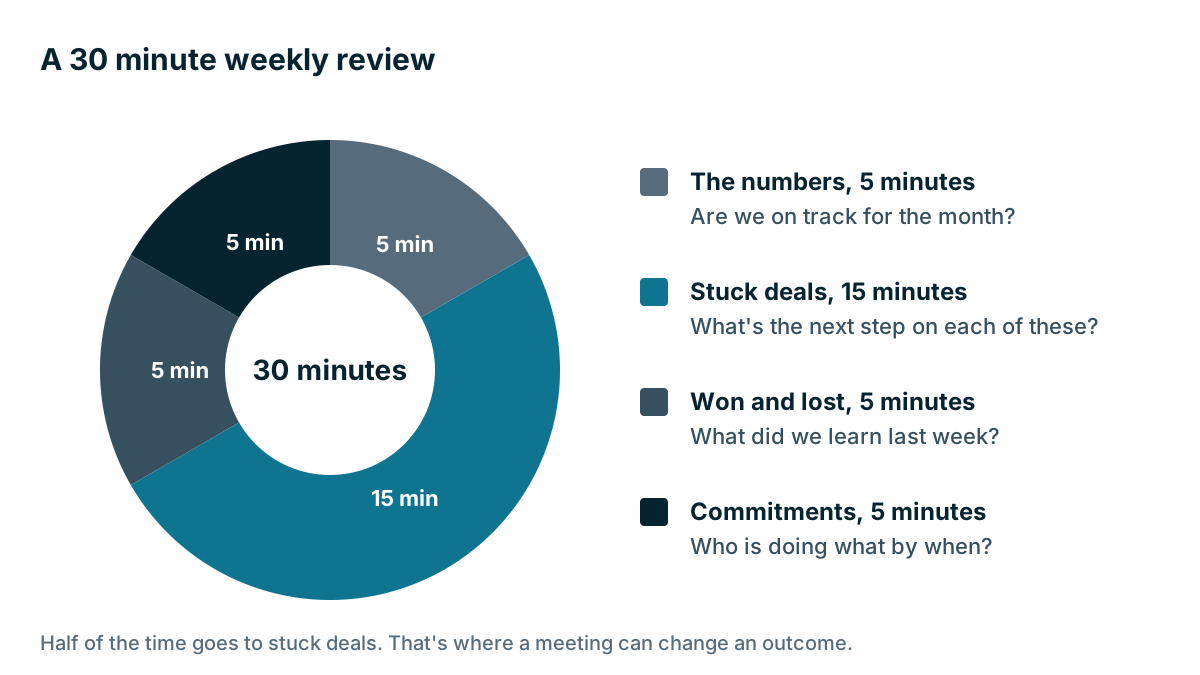
The numbers. Bring up your dashboard. Don't explain every tile. Ask what stands out. If nothing does, move on, and be glad.
Stuck deals. Open the list of deals past your flag, or with no next step. For each one, the owner answers in a sentence: what's happening, and what happens next? It either gets a dated next step or gets closed. This is where the meeting pays for itself.
Won and lost. Look at why a deal was won or lost. One or two quick points are enough. Patterns turn up here long before they show in a chart.
Commitments. Say out loud who's doing what by when. Log these as tasks in the CRM before anyone leaves.
Should the review run from the live CRM?
Run the meeting from the live CRM, with nobody bringing their own notes. If a deal isn't in the system, it doesn't get discussed. Update records during the meeting, as people talk.
Few things change behavior faster. People keep records up to date when they know they'll be on the screen on Monday, and you spend less time nagging.
Agree a time for everyone to have their deals updated, such as the end of Friday.
A worked example
Here is an invented catering firm with five staff. The numbers are made up. Monday's review shows this.
- 14 open deals, worth $62,000.
- $18,000 won this month against a $30,000 target, with one week gone.
- 3 deals past the 21-day flag.
They look at the stuck deals. The first is a wedding enquiry from six weeks ago. Nobody has spoken to the couple since the tasting, so the owner of the deal will call by Wednesday. The second is an office lunch contract waiting on a decision from a client's finance team, and it gets a date for a check-in. The third has gone quiet after two calls, so the team closes it as lost, with the reason no response.
That leaves 13 open deals. The firm also lost two deals last week, both to a competitor on a tasting fee. Nothing to act on yet with just two, but the owner writes it down and will watch for it next month.
The commitments are logged as three tasks. That took 30 minutes. Nobody gave a speech.

Keep it safe
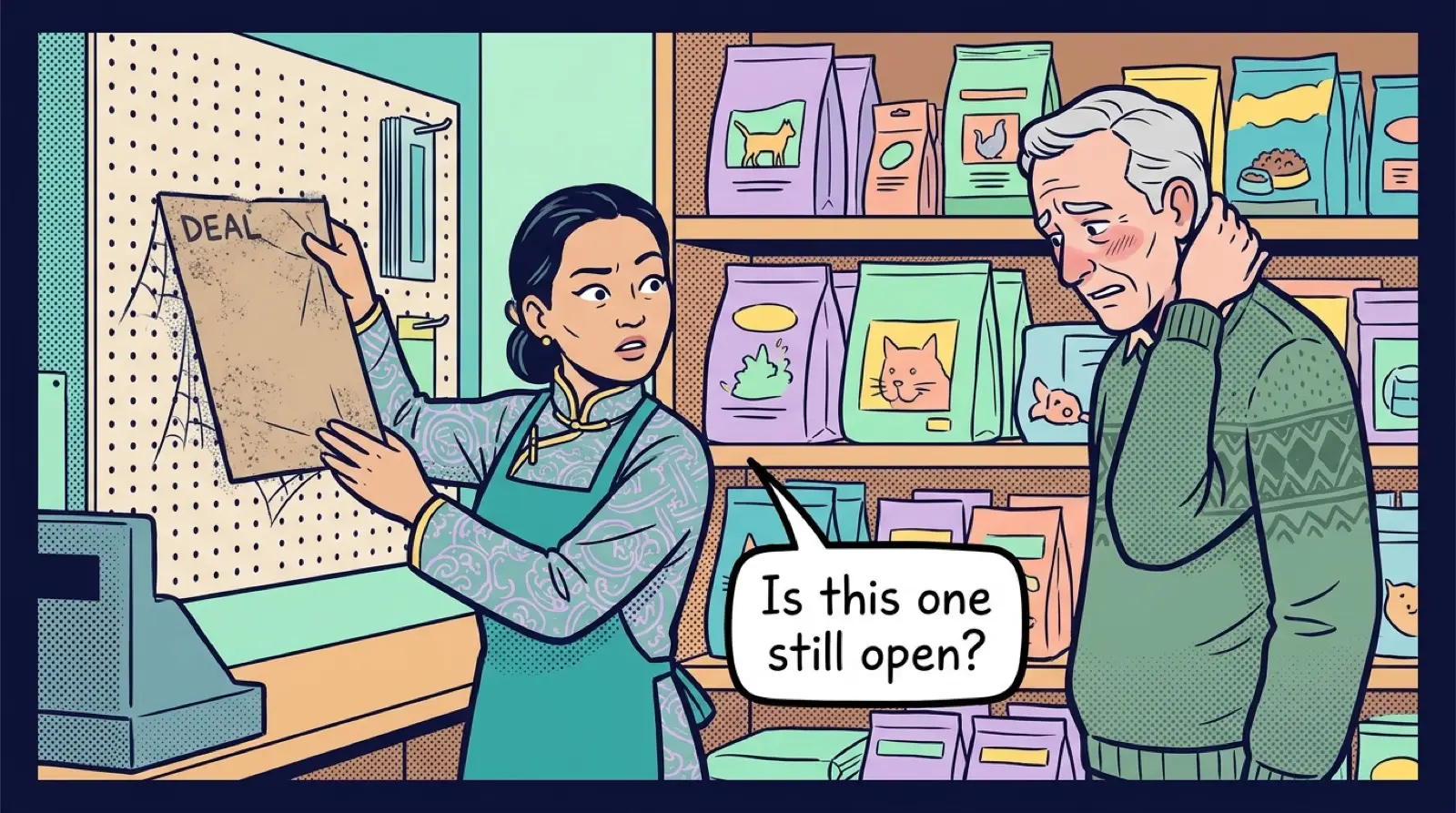
If the meeting feels like a telling-off, people will start hiding things. They'll keep dead deals open and leave bad news out. Then your data gets worse and the review stops working.
So set the tone. Ask questions about the deal, not the person. Treat closing a lost deal as a good thing, because it clears the list. Thank people for bringing bad news early. Keep individual performance talks for a private conversation.
What if you run the business on your own?
A solo owner gets as much out of this as a team does, and needs it more, because nobody else will ask. Book 15 minutes with yourself on Monday morning. Look at five things.
- New leads last week, and any you haven't answered
- Quotes that need chasing
- Deals with no next step
- What you won and lost, and why
- The three things you must do this week to hit the month
Treat it as an appointment with a customer. It's the one that gets cancelled most easily, so put it in the calendar as a repeating event.
How often should you take a higher view?
The weekly review covers your deals, so take a higher view every so often.
| How often | What to look at | Example decision |
|---|---|---|
| Weekly, 30 minutes | Deals, tasks, the month | Close or chase these three deals |
| Monthly, an hour | The five numbers, lead sources, Unknown entries | Move some ad money |
| Quarterly, half a day | Conversion rates, margins, rules, pricing, dashboards | Change a price or a process step |
The quarterly session is the time for slower questions, where small numbers have had time to add up. Is the win rate moving? Which kind of job makes money? Which automations can go?
How do you start next Monday?
Don't wait for a perfect dashboard. A filtered list of open deals is enough for the first meeting. Invite the people who own deals. Tell them what you're doing and why, and that it will take 30 minutes. Run it three or four times before you change anything.
You will likely find that the first few reviews are mostly about messy data. That's normal. By about the fifth, the mess will be smaller and the discussion will be about customers.
Tip
Keep a one-line note of what was decided, each week. After a few months, you'll have a plain record of what you tried, and you can look back and see what made a difference.
This is the habit that makes the rest of this course pay off. A CRM is a shared memory. The weekly review is when you read it.
Key takeaways
- Hold a 30-minute review at the same time each week: numbers, stuck deals, won and lost, commitments.
- Work from the live CRM, and give each stuck deal a dated next step or close it.
- Keep it safe, so that bad news shows up early. Closing a dead deal is a good result.
- Solo owners should run a 15-minute version, and everyone should add monthly and quarterly reviews.
Common questions
How long should a weekly sales review take?
About 30 minutes, held on the same day and at the same time each week. A meeting that always ends on time is one people keep coming to.
What should a solo owner review each week?
Book 15 minutes on Monday morning. Check new leads, quotes to chase, deals with no next step, what you won and lost and why, and the three things you must do that week.
Why run the review from the CRM instead of from notes?
If a deal is not in the system, it does not get discussed. People also keep records up to date when they know they will be on the screen.
Keep your place and test yourself
Enroll for free to save your progress, take the chapter quiz, and get a certificate when you pass every chapter. The lessons stay open to everyone either way.