

Chapter 10: Getting Your Team to Use It
Keeping Up the Habit
Launch energy fades, and then the data slowly goes stale. A 15-minute weekly check, a monthly question and a few sensible measures will keep the CRM alive.
Lesson 6 of 6 · 6 min read ·
Most teams try hard in the first month. There's a launch, some training, and a manager paying attention. Then a busy spell arrives, the Monday meeting gets skipped twice, and small gaps creep in. Nobody decides to stop using the CRM. It fades.
Fading is hard to see from the inside. The system still opens, and the board still shows deals. But the dates are old, and people start to double-check things somewhere else. Once the team stops trusting the data, they stop updating it, and that makes the data worse. You want to catch this early, and a small routine is enough to do it.
What should the weekly CRM check cover?
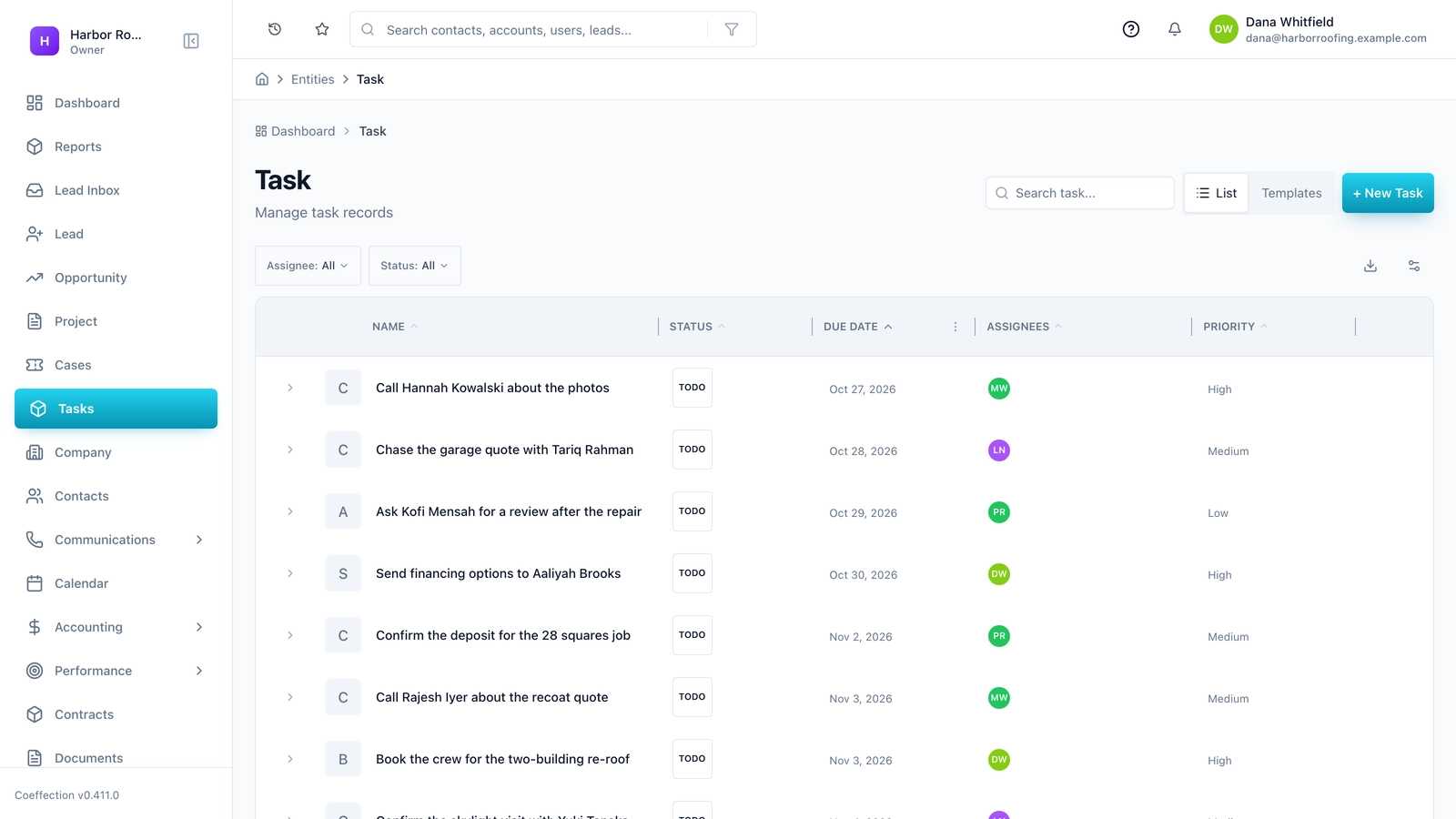
Once a week, someone looks at three lists. It takes about 15 minutes. If your CRM can save a filtered view, save each of these and you can open them in a single click.
- Open deals with no next step. Each one needs a next step or a decision to close it.
- Overdue tasks. Someone either does them, moves them on purpose, or deletes them.
- Open deals with no update in 30 days. Are these really alive? Change the 30 to suit how long you take to sell.
Do this at the same time each week, ideally just before your team meeting. Who does it depends on your size. In a small team, each person can check their own lists, and a manager can spot-check.
Example
An invented example. A garage door firm has nine staff and a steady flow of quotes. After a strong first two months, the owner notices the forecast looks too good to be true.
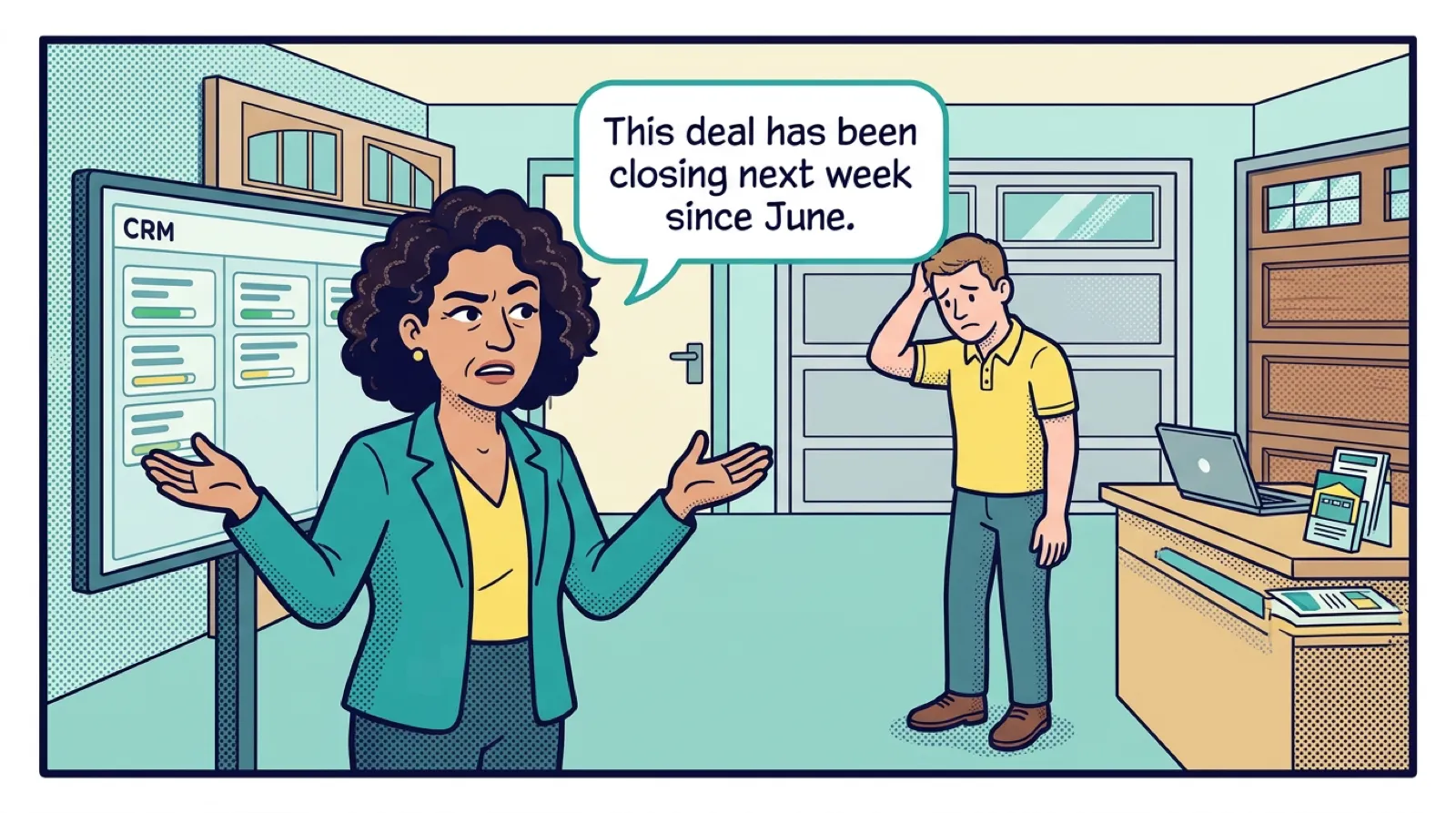
She runs the third list and finds 31 open quotes with no update in 30 days. Most of the customers bought elsewhere long ago. Her team spends one hour going through them. They close 24 as lost, call the other seven, and rescue two jobs.
She moves the check into the Monday meeting. The pipeline shrinks, and for the first time in a while she believes it.
Which measures show your CRM data is healthy?
Counting logins or notes tells you little. Someone can log in every day and do nothing useful. Pick a few measures that show the data is healthy.
| Measure | Why it helps | What to look for |
|---|---|---|
| Open deals with a next step | Shows whether deals are being worked | Close to all of them |
| Overdue tasks per person | Shows follow-ups slipping | Low and steady, no pile-ups |
| Deals with no update in 30 days | Shows stale pipeline | Falling or small |
| New customers with a known lead source | Shows enquiries are logged properly | Close to all of them |
| Questions answered from the CRM | Shows trust | People stop checking elsewhere |
Choose two or three, and track them monthly on one line of a simple sheet or a small dashboard. Trends matter more than any single number, and your own past month is the only comparison that means anything. We won't give you an industry benchmark, because a useful one for a business your size and trade is hard to find.
What should you ask the team each month?
Once a month, ask the team one question: what's annoying about the CRM right now? Do it in the team meeting, or walk around and ask. Then fix one thing.
This does more than any reminder. It keeps the system fitting the work as the work changes, and it shows that complaints lead to changes. You might remove a field, rename a stage, add a saved list or update the cheat sheet. Small fixes, made often, keep the system feeling like it belongs to the team.
How do you keep the habit through busy times?
Busy periods are when habits break. A landscaper's spring or a retailer's holiday rush will test any routine. Plan for that rather than hoping.
Decide ahead of time what the minimum is when things get hectic. For most teams that's two rules: new enquiries go in, and open deals keep their next step. Everything else can wait for a quiet week. A smaller rule that survives the rush beats a full rule that gets dropped, because it's easier to come back from.
What should you do when someone slips?
People will slip, and that isn't always a problem. If one person's lists start to pile up, look first for a reason. Have they got too many deals? Is something broken on their phone? Is their manager asking for updates elsewhere?
Raise it privately and early, with the record open in front of you. Keep it about the customers: these three people are waiting on a call from us. That's a much better conversation than one about compliance. If the pattern goes on after you've removed any real obstacles, treat it as you would any other part of the job that isn't getting done.
Give the habit a reason
People keep doing things that pay off for them. So point out when the data helps. When an old note saves a deal, or a customer is impressed that you remembered something, say so at the team meeting. When a covered vacation goes smoothly because the record was up to date, thank the person who kept it that way.
These are small moments, but they answer the question from the first lesson: what's in it for me? Over time, the answer stops being theory. The CRM becomes how the team remembers.
A simple yearly reset
Once a year, take an hour to look at the whole thing with fresh eyes.
- Read your rules page and remove anything nobody follows
- Look for fields nobody has filled in for six months
- Check that pipeline stages still match how you sell
- Update the cheat sheet and the new-hire plan
- Ask your newest hire what still confuses them
- Pick one thing to stop doing
Tip
Put the weekly check in the calendar as a recurring event with a named owner. Things with a name and a time get done. Things everyone is meant to remember tend to fall away first.
Key takeaways
- CRMs fade slowly. Once people stop trusting the data, they stop updating it.
- Check three lists each week: no next step, overdue tasks, and no recent update.
- Track a few data health measures, and compare them with your own past months.
- Ask each month what's annoying, then fix one thing.
- Decide your minimum rules for busy times before the rush arrives.
Common questions
How do I stop my CRM data going stale?
Check three lists once a week, for about 15 minutes: open deals with no next step, overdue tasks, and open deals with no update in 30 days. Change the 30 to suit how long you take to sell.
How can I tell if my CRM data is healthy?
Pick two or three measures, such as open deals with a next step, and track them monthly. Compare them with your own past months, since trends matter more than any single number.
What if someone on my team stops updating the CRM?
Raise it privately and early, with the record open in front of you. Look first for a reason, such as too many deals, a phone problem, or a manager asking for updates elsewhere.
Keep your place and test yourself
Enroll for free to save your progress, take the chapter quiz, and get a certificate when you pass every chapter. The lessons stay open to everyone either way.